

Australia Data Center Market Size, Share, Report 2026–2034
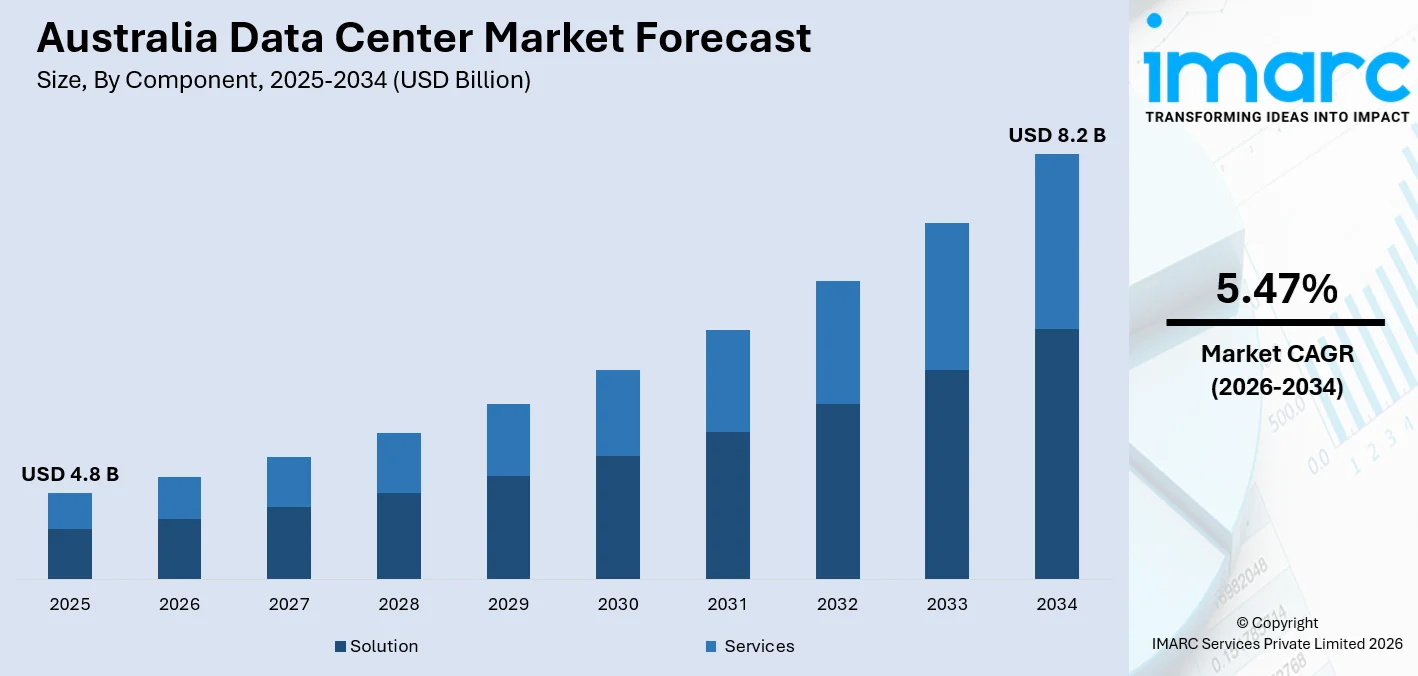
Australia data center market was USD 4.8B in 2025 and is projected to reach USD 8.2B by 2034, growing at a 5.47% CAGR (2026–2034).
AUSTRALIA, March 23, 2026 /EINPresswire.com/ -- 𝗠𝗮𝗿𝗸𝗲𝘁 𝗢𝘃𝗲𝗿𝘃𝗶𝗲𝘄The Australia data center market size was valued at USD 4.8 Billion in 2025. Looking forward, the market is expected to reach USD 8.2 Billion by 2034, exhibiting a CAGR of 5.47% during 2026–2034. The market share is expanding, driven by rising cloud adoption, increasing digital transformation across industries, and strong demand for edge computing. Expanding investments from global players, renewable energy integration, and government initiatives for data localization are shaping the industry, while enhanced connectivity and advanced infrastructure are positioning Australia as a critical regional hub for data services in the Asia-Pacific. As of early 2024, Australia had 25.21 million internet users — representing a 94.9% penetration rate — with social media engagement reaching 20.80 million users at 78.3% of the population, and 33.59 million active mobile cellular connections exceeding the total population by 126.4%, collectively generating the sustained data storage and processing demand that underpins market growth. The proliferation of artificial intelligence, big data analytics, and the Internet of Things (IoT) is creating additional structural demand for hyperscale and edge data center infrastructure — with Equinix committing AU$240 Million in June 2024 to expand its Sydney and Melbourne data centers by 4,175 cabinets in direct response to growing enterprise AI infrastructure requirements. Australia Capital Territory and New South Wales lead regionally, with Sydney serving as the country's primary data center hub through its concentration of financial institutions, cloud hyperscalers, and submarine cable landing infrastructure.
𝗪𝗵𝘆 𝗛𝗼𝘁 𝗧𝗼𝗱𝗮𝘆: CBRE just described AU data centers as "one of the most attractive markets globally"; AirTrunk 354MW Melbourne campus under construction NOW; Nvidia partnered with CDC across 4 cities; NEXTDC 550MW campus active and live deployment happening this week
𝗛𝗼𝘄 𝗔𝗜 𝗶𝘀 𝗥𝗲𝘀𝗵𝗮𝗽𝗶𝗻𝗴 𝘁𝗵𝗲 𝗙𝘂𝘁𝘂𝗿𝗲 𝗼𝗳 𝘁𝗵𝗲 𝗔𝘂𝘀𝘁𝗿𝗮𝗹𝗶𝗮 𝗗𝗮𝘁𝗮 𝗖𝗲𝗻𝘁𝗲𝗿 𝗠𝗮𝗿𝗸𝗲𝘁?
• The proliferation of enterprise AI adoption is directly driving hyperscale data center expansion in Australia — with Equinix's AU$240 Million June 2024 investment into Sydney and Melbourne facilities explicitly targeting the infrastructure demands of widespread enterprise AI deployment, signaling that AI workload requirements are becoming a primary capacity planning driver for Australian data center operators.
• AI-driven monitoring and operations tools are being integrated into Australian data center management systems — enabling automated anomaly detection, predictive equipment maintenance, dynamic workload optimization, and intelligent energy management that reduce operational costs, improve uptime reliability, and help operators meet increasingly stringent energy efficiency and carbon reduction commitments.
• The Australian government's AUD 18 Million investment in Quantum Australia — announced in April 2024 to establish a collaboration between universities and industry specialists in quantum and edge computing — signals national commitment to building AI and advanced computing infrastructure that will require robust, low-latency data center capacity to support research-to-commercial technology translation.
• Microsoft's major digital infrastructure investment in Australia — announced in October 2023 and focused on helping the nation seize the AI era to strengthen economic competitiveness and cybersecurity resilience — represents one of the largest AI-driven data center demand signals in Australian market history, with implications for the hyperscale colocation and managed services segments across Sydney and Melbourne.
• AI-powered sustainability systems are enabling Australian data center operators to optimize cooling efficiency, automate renewable energy procurement, and dynamically manage power usage effectiveness (PUE) — with advanced liquid cooling and free-air systems deployed in new facilities such as OVHcloud's third Sydney data center reducing energy consumption while maintaining the high-performance operational requirements of AI and HPC workloads.
𝗥𝗲𝗾𝘂𝗲𝘀𝘁 𝗮 𝗕𝘂𝘀𝗶𝗻𝗲𝘀𝘀 𝗦𝗮𝗺𝗽𝗹𝗲 𝗥𝗲𝗽𝗼𝗿𝘁 𝗳𝗼𝗿 𝗣𝗿𝗼𝗰𝘂𝗿𝗲𝗺𝗲𝗻𝘁 & 𝗜𝗻𝘃𝗲𝘀𝘁𝗺𝗲𝗻𝘁 𝗘𝘃𝗮𝗹𝘂𝗮𝘁𝗶𝗼𝗻:
https://www.imarcgroup.com/australia-data-center-market/requestsample
𝗠𝗮𝗿𝗸𝗲𝘁 𝗧𝗿𝗲𝗻𝗱𝘀 𝗮𝗻𝗱 𝗜𝗻𝘀𝗶𝗴𝗵𝘁𝘀
• 𝗦𝘂𝘀𝘁𝗮𝗶𝗻𝗮𝗯𝗶𝗹𝗶𝘁𝘆 𝗕𝗲𝗰𝗼𝗺𝗶𝗻𝗴 𝗖𝗼𝗿𝗲 𝗜𝗻𝗳𝗿𝗮𝘀𝘁𝗿𝘂𝗰𝘁𝘂𝗿𝗲 𝗦𝘁𝗮𝗻𝗱𝗮𝗿𝗱: Data center operators are integrating solar, wind, and hydroelectric power alongside advanced liquid cooling and free-air systems — with OVHcloud's May 2024 Sydney facility launch using water-cooling technology as a model for sustainable high-performance cloud infrastructure, and LEED and Green Star certifications increasingly required by environmentally conscious enterprise tenants and investors.
• 𝗖𝗹𝗼𝘂𝗱 𝗔𝗱𝗼𝗽𝘁𝗶𝗼𝗻 𝗥𝗲𝘀𝗵𝗮𝗽𝗶𝗻𝗴 𝗜𝗻𝗳𝗿𝗮𝘀𝘁𝗿𝘂𝗰𝘁𝘂𝗿𝗲 𝗗𝗲𝗺𝗮𝗻𝗱: Businesses across industries are migrating to public, private, and hybrid cloud models — with Atturra's August 2024 sovereign cloud expansion at NextDC's S3 Sydney facility exemplifying the localized, AI-capable cloud storage demand being driven by enterprise digital transformation, while hybrid cloud infrastructures command particular growth through the balance they offer between on-premises control and cloud scalability.
• 𝗘𝗱𝗴𝗲 𝗖𝗼𝗺𝗽𝘂𝘁𝗶𝗻𝗴 𝗘𝘅𝗽𝗮𝗻𝗱𝗶𝗻𝗴 𝗕𝗲𝘆𝗼𝗻𝗱 𝗠𝗲𝘁𝗿𝗼𝗽𝗼𝗹𝗶𝘁𝗮𝗻 𝗛𝘂𝗯𝘀: Australia's widespread geography and accelerating 5G deployment are driving investment in edge data centers for real-time applications including IoT, autonomous systems, smart cities, and industrial automation — with decentralized, low-latency processing infrastructure becoming essential for industries in regional areas that require data sovereignty compliance and reduced dependence on metropolitan facilities.
By component, solutions — encompassing servers, storage systems, networking equipment, and power infrastructure — dominate market revenue, while services including managed services, consulting, and disaster recovery are the fastest-growing component as enterprises seek to reduce operational complexity through outsourced IT infrastructure management. By type, colocation leads by facility count and revenue through its appeal to cost-conscious enterprises seeking scalable, third-party-managed infrastructure, while hyperscale is the fastest-growing type driven by investments from AWS, Microsoft, and Google in cloud-native capacity. Edge is emerging as a high-growth niche through 5G and IoT demand. By enterprise size, large enterprises account for the dominant revenue share through their demand for dedicated, high-performance, and compliance-driven facilities, while SMEs are driving colocation and managed services growth through cost-effective digital transformation adoption. By end user, BFSI leads through its high-security, high-compliance data processing requirements, with IT and telecom, government, and energy and utilities each contributing meaningful demand. Regionally, New South Wales leads by revenue and capacity through Sydney's hyperscale concentration, while Victoria anchors colocation and financial services demand through Melbourne.
𝗞𝗲𝘆 𝗚𝗿𝗼𝘄𝘁𝗵 𝗗𝗿𝗶𝘃𝗲𝗿𝘀
𝗗𝗮𝘁𝗮 𝗦𝗼𝘃𝗲𝗿𝗲𝗶𝗴𝗻𝘁𝘆, 𝗣𝗿𝗶𝘃𝗮𝗰𝘆 𝗖𝗼𝗺𝗽𝗹𝗶𝗮𝗻𝗰𝗲, 𝗮𝗻𝗱 𝗥𝗲𝗴𝘂𝗹𝗮𝘁𝗼𝗿𝘆 𝗙𝗿𝗮𝗺𝗲𝘄𝗼𝗿𝗸𝘀
Australia's strengthening data privacy and security legislation — anchored by the Australian Privacy Principles (APP) — is a fundamental structural demand driver for domestic data center investment, requiring that personal data of Australian citizens be stored and processed within the country rather than routed through international cloud infrastructure. This compliance imperative is particularly acute for BFSI, healthcare, and government sectors that handle high volumes of sensitive personal and financial information subject to strict domestic regulatory standards and audit requirements. As organizations face growing pressure to demonstrate compliance with APP and related state and federal regulations, the necessity for locally domiciled data centers offering certified security infrastructure, data residency guarantees, and documented compliance reporting becomes a non-negotiable procurement requirement rather than a discretionary spending choice. Concerns regarding data sovereignty extend beyond regulatory compliance to encompass national security considerations — with government investment programs including the Canberra Data Center initiative reinforcing the federal commitment to ensuring critical public sector data remains within sovereign Australian infrastructure rather than processed through offshore facilities subject to foreign jurisdiction.
𝟱𝗚 𝗗𝗲𝗽𝗹𝗼𝘆𝗺𝗲𝗻𝘁 𝗮𝗻𝗱 𝗡𝗲𝘅𝘁-𝗚𝗲𝗻𝗲𝗿𝗮𝘁𝗶𝗼𝗻 𝗖𝗼𝗻𝗻𝗲𝗰𝘁𝗶𝘃𝗶𝘁𝘆 𝗜𝗻𝗳𝗿𝗮𝘀𝘁𝗿𝘂𝗰𝘁𝘂𝗿𝗲
The progressive national rollout of 5G networks across Australia is driving structural demand for high-bandwidth, ultra-low-latency data center infrastructure capable of processing the exponential growth in connected device data that 5G enables across both metropolitan and regional areas. 5G technology facilitates faster data transmission, enhanced connectivity, and accommodates substantial increases in the number of connected devices — from smartphones and IoT sensors to autonomous vehicles, smart city infrastructure, and industrial automation systems — each generating data volumes that require localized, high-capacity processing facilities to manage effectively at the speeds that real-time applications demand. Edge data centers are particularly critical in this context, enabling computation to occur closer to the point of data generation rather than routing traffic back to metropolitan hyperscale facilities — reducing latency to the sub-millisecond levels required for autonomous vehicle decision-making, telemedicine diagnostics, and industrial process control that represent 5G's highest-value commercial applications. With Telstra achieving 91% 5G population coverage and continued infrastructure expansion from Optus and other carriers, Australia's connectivity improvements are systematically creating the demand conditions for edge data center deployment in locations beyond the Sydney-Melbourne-Brisbane hyperscale corridor.
𝗗𝗶𝗴𝗶𝘁𝗮𝗹 𝗧𝗿𝗮𝗻𝘀𝗳𝗼𝗿𝗺𝗮𝘁𝗶𝗼𝗻 𝗔𝗰𝗿𝗼𝘀𝘀 𝗜𝗻𝗱𝘂𝘀𝘁𝗿𝗶𝗲𝘀 𝗗𝗿𝗶𝘃𝗶𝗻𝗴 𝗜𝗻𝗳𝗿𝗮𝘀𝘁𝗿𝘂𝗰𝘁𝘂𝗿𝗲 𝗗𝗲𝗺𝗮𝗻𝗱
Accelerating digital transformation across Australia's major industry sectors is compelling businesses to invest in IT infrastructure capable of supporting cloud computing, big data analytics, AI, and IoT at the scale and reliability that competitive operations now require. The shift toward cloud-based systems is creating consistent demand for secure, scalable, and high-performance data centers as organizations in finance, healthcare, retail, e-commerce, and government migrate workloads from on-premises hardware to cloud-native and hybrid infrastructure environments — with Australia digital transformation market reaching USD 18.5 Billion in 2024, underscoring the depth of enterprise technology spending driving data center capacity requirements. Data centers are becoming structurally mandatory to manage and process the massive information volumes generated by digital business operations — ensuring the data security, processing speed, and operational reliability that businesses need to deliver competitive digital services to their customers. The rising adoption of SaaS applications, remote work environments, and AI-powered business intelligence tools further intensifies the demand for adaptable, high-availability data center infrastructure that can scale dynamically with evolving enterprise requirements across Australia's diverse and growing digital economy.
𝗠𝗮𝗿𝗸𝗲𝘁 𝗦𝗲𝗴𝗺𝗲𝗻𝘁𝗮𝘁𝗶𝗼𝗻
• 𝗖𝗼𝗺𝗽𝗼𝗻𝗲𝗻𝘁 𝗜𝗻𝘀𝗶𝗴𝗵𝘁𝘀:
• Solution
• Services
• 𝗧𝘆𝗽𝗲 𝗜𝗻𝘀𝗶𝗴𝗵𝘁𝘀:
• Colocation
• Hyperscale
• Edge
• Others
• 𝗘𝗻𝘁𝗲𝗿𝗽𝗿𝗶𝘀𝗲 𝗦𝗶𝘇𝗲 𝗜𝗻𝘀𝗶𝗴𝗵𝘁𝘀:
• Large Enterprises
• Small and Medium Enterprises
• 𝗘𝗻𝗱 𝗨𝘀𝗲𝗿 𝗜𝗻𝘀𝗶𝗴𝗵𝘁𝘀:
• BFSI
• IT and Telecom
• Government
• Energy and Utilities
• Others
• 𝗥𝗲𝗴𝗶𝗼𝗻𝗮𝗹 𝗜𝗻𝘀𝗶𝗴𝗵𝘁𝘀:
• Australia Capital Territory & New South Wales
• Victoria & Tasmania
• Queensland
• Northern Territory & Southern Australia
• Western Australia
𝗥𝗲𝗰𝗲𝗻𝘁 𝗡𝗲𝘄𝘀 𝗮𝗻𝗱 𝗗𝗲𝘃𝗲𝗹𝗼𝗽𝗺𝗲𝗻𝘁𝘀
• 𝗗𝗲𝗰𝗲𝗺𝗯𝗲𝗿 𝟮𝟬𝟮𝟰 — 𝗗𝗖𝗜 𝗢𝗽𝗲𝗻𝘀 𝗔𝗱𝗲𝗹𝗮𝗶𝗱𝗲 𝟬𝟮 𝗗𝗮𝘁𝗮 𝗖𝗲𝗻𝘁𝗲𝗿 𝘄𝗶𝘁𝗵 𝗔𝗨$𝟳𝟬 𝗠𝗶𝗹𝗹𝗶𝗼𝗻 𝗜𝗻𝘃𝗲𝘀𝘁𝗺𝗲𝗻𝘁: DCI announced the inauguration of its new Adelaide 02 data center in Kidman Park, South Australia — backed by an AU$70 Million investment — increasing the region's total data center capacity to 5.4MW and strengthening South Australia's digital infrastructure credentials as an emerging technology hub outside Australia's primary metropolitan markets.
• 𝗦𝗲𝗽𝘁𝗲𝗺𝗯𝗲𝗿 𝟮𝟬𝟮𝟰 — 𝗕𝗹𝗮𝗰𝗸𝘀𝘁𝗼𝗻𝗲 𝗔𝗰𝗾𝘂𝗶𝗿𝗲𝘀 𝗔𝗶𝗿𝗧𝗿𝘂𝗻𝗸 𝗳𝗼𝗿 𝗔𝗽𝗽𝗿𝗼𝘅𝗶𝗺𝗮𝘁𝗲𝗹𝘆 𝗨𝗦𝗗 𝟭𝟲.𝟭𝟮 𝗕𝗶𝗹𝗹𝗶𝗼𝗻: Blackstone acquired Australian data center operator AirTrunk — the largest data center platform in the Asia-Pacific — for approximately USD 16.12 Billion, capitalizing on rising demand for cloud and AI infrastructure and enhancing Blackstone's USD 55 Billion global data center portfolio with a strategically significant Asia-Pacific footprint.
• 𝗦𝗲𝗽𝘁𝗲𝗺𝗯𝗲𝗿 𝟮𝟬𝟮𝟰 — 𝗡𝗲𝘅𝘁𝗗𝗖 𝗟𝗮𝘂𝗻𝗰𝗵𝗲𝘀 𝗔𝗱𝗲𝗹𝗮𝗶𝗱𝗲'𝘀 𝗙𝗶𝗿𝘀𝘁 𝗧𝗶𝗲𝗿 𝗜𝗩 𝗗𝗮𝘁𝗮 𝗖𝗲𝗻𝘁𝗲𝗿: NextDC announced the launch of its A1 Adelaide data center in South Australia — the city's first Tier IV certified facility — spanning 3,000 sqm with 5MW IT capacity, supporting AI workloads and connecting over 750 cloud providers, marking a significant step in expanding high-availability data center infrastructure beyond Sydney and Melbourne.
• 𝗦𝗲𝗽𝘁𝗲𝗺𝗯𝗲𝗿 𝟮𝟬𝟮𝟰 — 𝗖𝗹𝗼𝘂𝗱 𝗖𝗮𝗿𝗿𝗶𝗲𝗿 𝗟𝗮𝘂𝗻𝗰𝗵𝗲𝘀 𝗘𝗰𝗼-𝗙𝗿𝗶𝗲𝗻𝗱𝗹𝘆 𝗦𝗼𝘂𝘁𝗵𝗲𝗿𝗻 𝗛𝗶𝗴𝗵𝗹𝗮𝗻𝗱𝘀 𝗗𝗮𝘁𝗮 𝗖𝗮𝗺𝗽𝘂𝘀: Cloud Carrier announced the launch of its Southern Highlands Data Campus (SHDC) — representing a new benchmark for eco-friendly and energy-efficient data center design in Australia, addressing growing enterprise demand for sustainable colocation options outside the high-density and high-cost Sydney metropolitan market.
• 𝗦𝗲𝗽𝘁𝗲𝗺𝗯𝗲𝗿 𝟮𝟬𝟮𝟰 — 𝗭𝘀𝗰𝗮𝗹𝗲𝗿 𝗟𝗮𝘂𝗻𝗰𝗵𝗲𝘀 𝗖𝗼-𝗟𝗼𝗰𝗮𝘁𝗲𝗱 𝗗𝗮𝘁𝗮 𝗖𝗲𝗻𝘁𝗲𝗿 𝗶𝗻 𝗣𝗲𝗿𝘁𝗵: Zscaler launched a new co-located data center in Perth to provide enhanced support to customers in Western Australia — further solidifying its Zero Trust cybersecurity posture for regional enterprises and reinforcing Perth's emerging role as a strategic data center location for operators serving the state's significant mining, energy, and resources sector client base.
• 𝗢𝗰𝘁𝗼𝗯𝗲𝗿 𝟮𝟬𝟮𝟯 — 𝗠𝗶𝗰𝗿𝗼𝘀𝗼𝗳𝘁 𝗔𝗻𝗻𝗼𝘂𝗻𝗰𝗲𝘀 𝗠𝗮𝗷𝗼𝗿 𝗔𝗜 𝗮𝗻𝗱 𝗖𝘆𝗯𝗲𝗿𝘀𝗲𝗰𝘂𝗿𝗶𝘁𝘆 𝗜𝗻𝗳𝗿𝗮𝘀𝘁𝗿𝘂𝗰𝘁𝘂𝗿𝗲 𝗜𝗻𝘃𝗲𝘀𝘁𝗺𝗲𝗻𝘁 𝗶𝗻 𝗔𝘂𝘀𝘁𝗿𝗮𝗹𝗶𝗮: Microsoft announced substantial digital infrastructure, skilling, and cybersecurity investments in Australia — aimed at helping the nation seize the AI era to strengthen economic competitiveness, generate high-value employment, and defend against growing cyber threats — representing one of the most significant hyperscale demand commitments in Australian data center market history.
𝗢𝘁𝗵𝗲𝗿 𝗿𝗲𝗽𝗼𝗿𝘁 𝗯𝘆 𝗜𝗺𝗮𝗿𝗰 𝗚𝗿𝗼𝘂𝗽
Australia Data Center Construction Market:
https://www.imarcgroup.com/australia-data-center-construction-market
Australia Electric Scooters Market
https://www.imarcgroup.com/australia-electric-scooters-market
Australia Hydraulic Cylinders Market
https://www.imarcgroup.com/australia-hydraulic-cylinders-market
𝗔𝗯𝗼𝘂𝘁 𝗨𝘀
IMARC Group is a global management consulting firm that helps the world's most ambitious changemakers to create a lasting impact. The company provides a comprehensive suite of market entry and expansion services. IMARC's offerings include thorough market assessment, feasibility studies, company incorporation assistance, factory setup support, regulatory approvals and licensing navigation, branding, marketing and sales strategies, competitive landscape and benchmarking analyses, pricing and cost research, and procurement research.
𝗖𝗼𝗻𝘁𝗮𝗰𝘁 𝗨𝘀
IMARC Group
134 N 4th St. Brooklyn, NY 11249, USA
Email: sales@imarcgroup.com
Tel No: (D) +91 120 433 0800
United States: +1-201-971-6302
Elena Anderson
IMARC Services Private Limited
+1 201-971-6302
email us here
Visit us on social media:
LinkedIn
Legal Disclaimer:
EIN Presswire provides this news content "as is" without warranty of any kind. We do not accept any responsibility or liability for the accuracy, content, images, videos, licenses, completeness, legality, or reliability of the information contained in this article. If you have any complaints or copyright issues related to this article, kindly contact the author above.
