

Why Veganuary May Be Going to the Dogs (and Cats)
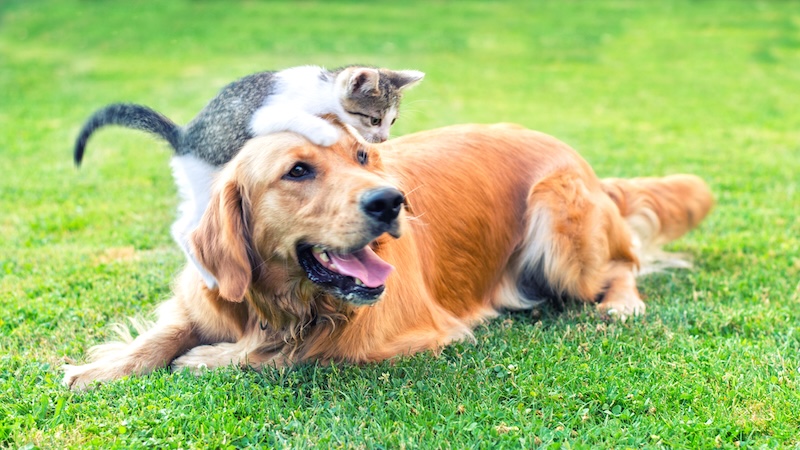
Dogs and cats consume a significant portion of the world's meat
Meat-based pet food has created an epidemic of obesity and other diet-related illnesses among our dogs and cats”
LONDON, UNITED KINGDOM, January 1, 2026 /EINPresswire.com/ -- As the world awoke on January 1, millions emerged from New Year’s Eve hangovers with a renewed desire to embrace healthier lifestyles. In 2025 more than 25 million people embraced that fresh start through Veganuary, a global movement inviting people to explore plant-based diets for the benefit of both personal health and the planet. Until very recently, however, our pets were forgotten. Now, a leading veterinary professor is urging that Veganuary go further—by including dogs and cats too.— Prof. Andrew Knight
Dogs and cats are widely regarded as beloved family members, yet their diets are rarely scrutinized with the same care. According to veterinary professor Andrew Knight at Murdoch University School in Australia, this oversight has contributed to an “epidemic of obesity and other diet-related illnesses” among companion animals. By late 2025, evidence had mounted from 11 studies in dogs and three in cats showing that animals can thrive on modern vegan or vegetarian diets when these are carefully designed. “Certain health benefits appear consistent,” Knight explains, including lower rates of obesity and improvements in allergy-related conditions such as itchy skin, ear problems, and digestive issues. He stresses, however, that vegan pet foods must come from reputable manufacturers that add essential nutrients to ensure nutritional completeness.
Surprisingly, perhaps, given their carnivorous ancestries, dogs and cats frequently appear to enjoy such diets. The largest study to date, involving more than 2,300 dogs and 1,100 cats, compared behavioural signs of enjoyment between animals fed vegan and meat-based foods. The result: no significant difference overall. “Pets have their own personalities and preferences,” Knight notes, “but on average, they seem to enjoy commercial vegan pet foods just as much as conventional ones.”
The implications go well beyond individual pet health and happiness. While awareness of the environmental costs of animal agriculture is growing, few people realize the scale of pet food’s impact. Knight’s research shows that in countries with high pet ownership, such as the United States, pet food accounts for around 20% of all land animals killed for food, alongside billions of fish and other marine animals. Globally, the figure is close to 9%, even after accounting for the use of by-products from human food production. In 2018, this translated to at least six billion land animals killed each year to feed the world’s roughly 470 million dogs—a number that has only increased since.
Transitioning dogs to nutritionally complete vegan diets could unlock dramatic environmental benefits, freeing up land and freshwater for reforestation, biodiversity recovery, and carbon capture. It would also avoid around 0.57 gigatonnes of CO₂-equivalent emissions every year—around one and a half times the UK’s total greenhouse gas emissions in 2024.
Efficiency is another key factor. Most of the plant calories fed to farmed animals are lost during conversion into meat, milk, or eggs. Feeding pets plant-based ingredients directly is far more efficient, and a global shift to vegan dog food could save enough food energy annually to feed around 450 million people—equivalent to the entire population of the European Union.
Even when the world’s estimated 370 million cats (in 2018) are considered, the sustainability gains are striking. A global transition to nutritionally complete vegan cat food could save enough food energy each year to feed around 70 million people—more than the population of the UK.
As Knight puts it, “An average-sized dog can consume as much meat as a human.” For those looking to make 2026 a year of better health and lower environmental impact, he suggests that Veganuary is a powerful place to start—and one that shouldn’t stop at the dinner bowls of our pets. Further guidance is available at www.SustainablePetFood.info.
A KNIGHT
Sustainable Pet Food Foundation
Andrew.Knight@murdoch.edu.au
Visit us on social media:
LinkedIn
Instagram
Facebook
YouTube
Legal Disclaimer:
EIN Presswire provides this news content "as is" without warranty of any kind. We do not accept any responsibility or liability for the accuracy, content, images, videos, licenses, completeness, legality, or reliability of the information contained in this article. If you have any complaints or copyright issues related to this article, kindly contact the author above.
